Skip to product information
1 of 2

Rosco TV Paint – White (5735)

Rosco TV Paint – White (5735)

Regular price $299.00 NZD
Regular price Sale price $299.00 NZD
Sale Contact us to order
Taxes included. Shipping calculated at checkout.

New Zealand customers
We’re currently taking enquiries for this product in New Zealand — please leave your details and we’ll assist with your order. Pricing shown is indicative only.


Rosco TV White Paint (5735) — Cyclorama & Studio “Camera White” (60% Reflectance)

Rosco TV White is a specialised studio/cyclorama paint for film, broadcast and stage environments where the background must read as a clean, controllable white under lighting and on camera. Its key advantage is a calibrated 60% reflectance — widely used as the maximum brightness for video white balancing.

60% reflectance (white balance)
Super-matte finish
Water-based (vinyl acrylic)
Low VOC (max 50 g/L)
Coverage ≈ 7.4 m²/L
Sample pot available

Why it stands out: brighter “visual whites” can blow out highlights and create hotspots on camera. TV White is engineered so lighting designers can push intensity, gradients and colour washes while keeping exposure controllable.

Metric note: TV Paint is often referenced in US units. This page uses AU-friendly metric for planning.

Not sure about the neutral-grey colour?

Try a Rosco TV White Sample Pot before purchasing a full-size container. The sample lets you test the intended colour, super-matte finish, adhesion and camera response on your own surface.

1 m²
Approximately enough to paint 1 square metre Decanted by CFATS from genuine Rosco TV White stock. Actual coverage depends on the surface, porosity and application method.

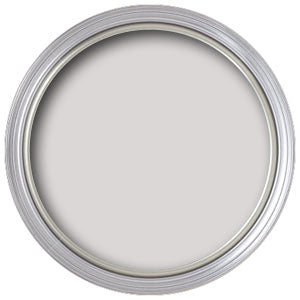
TV White is intentionally a light neutral grey. Apply the sample, allow it to dry, then assess it under your intended studio lighting and through the camera.

Why 60% reflectance is the “sweet spot”

Ordinary white paint can over-expose and produce glare under cyc lighting. TV White’s 60% reflectance is engineered to sit at the top end of usable brightness for camera white balance, giving you “white” on screen without sacrificing control.

  • Cleaner exposure: reduces clipping and hotspots
  • Smoother illumination: helps lighting gradients look even across the cyc
  • More control: colour washes stay predictable instead of spiking

Why TV White can look slightly neutral (and why that’s correct)

It’s common to open TV White and notice it looks slightly neutral/grey. That’s intentional — camera sensors and stage lighting respond differently to “pure” bright whites.

TV White is “camera white”, not “visual white”. The neutral balance supports the 60% reflectance target and helps prevent glare and uneven reflections, so it reads as a clean, consistent white background once the cyc is lit.

Where it’s used

  • Film & TV cycloramas and infinity walls
  • Broadcast studios and multi-camera spaces
  • Theatre cycloramas where smooth gradients matter
  • Photography / video backdrops needing consistent exposure

If your brief is “must look visually bright white to the eye”

Some projects, including schools, foyers, multipurpose rooms and general scenery, simply want a backdrop that reads bright white in normal room lighting. We cover that too — without undermining what TV White is designed for.

Rosco Off Broadway — White White (5351)

A visually bright scenic white for flats, backdrops and general scenic work where “white-white” to the eye is the priority.

For cycloramas and studio environments, TV White remains the recommended option because it is engineered for camera white balance and lighting control.

Application guide (metric + recommended primer)
  1. Surface preparation: Clean, dry and dust-free. Fill and sand imperfections because cyc lighting can reveal surface defects.
  2. Prime porous surfaces: Rosco specifies priming porous surfaces using Rosco Tough Prime.
  3. Mix well: Stir, rather than shake, until the paint is uniform.
  4. Dilution: Use straight from the container. If needed, dilute with up to 10% clean water.
  5. Apply: Brush, roller or spray. Thin, even coats with a wet edge help reduce visible patterns.

Recommended primer: Rosco Tough Prime – White

For cycloramas, a consistent base is critical. We recommend Tough Prime – White as the primer under TV White to help achieve uniform colour and adhesion across large surfaces.

Tip: If you can see patchiness in the base coat, it will often become more visible once you begin lighting gradients across the surface.

Always test a small section using the intended substrate, primer, TV White, lighting and camera setup before committing to the complete cyclorama.

Technical information (metric quick reference)

Specification TV White 5735
Reflectance 60% — maximum brightness for video white balancing
Finish Super-matte, designed to reduce unintended reflections
Solvent Water
Binder type Vinyl acrylic
VOC Maximum 50 g/L
Coverage Approximately 28 m² per 3.79 L as a planning guide.
Approximately 7.4 m² per litre, depending on the surface and application method.
Dry time Touch dry in approximately 30 minutes at 24°C. Conditions vary.
Recoat time Approximately 1–2 hours. Conditions vary.
Dry film thickness Approximately 0.05 mm

Tell CFATS your cyclorama size in metres, including its width, height and whether it includes a curved sweep, and we can help estimate the required quantity and coat count.

Further reading from Rosco

This Rosco article explains why reflectance, surface finish and lighting behaviour matter when comparing TV White with conventional white paint.

Read: 3 Reasons TV White Is Best for Cycloramas

Cautions & disclaimer

  • Test first: always test a small area using your intended primer, lighting and camera setup before full application.
  • Lighting drives appearance: the final appearance of white is affected by the lighting design, exposure and camera settings.
  • Ventilation and PPE: use suitable workshop PPE and ventilation. Review the current Safety Data Sheet before use.

Rosco disclaimer: All technical data, recommendations and service are accurate to the best of our knowledge. Rosco assumes no responsibility for results obtained or damage incurred from use since method of application and use are beyond our control.

View full details