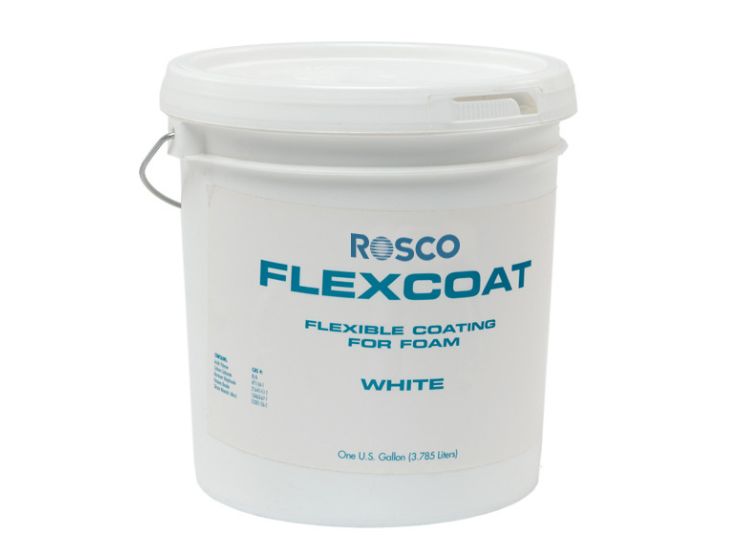

Rosco FlexCoat is a water-based, non-toxic, flexible acrylic coating designed to protect foam scenery and props with a durable, slightly elastic finish. It’s ideal when your build needs to bend, compress, travel, or take impact without a rigid shell cracking.
- Flexible + tough: helps resist cracking/chipping on moving or squeezable builds
- Foam-friendly: works on polyurethane foam, polystyrene, and other scenic substrates
- Weather resistant: great for many outdoor / high-exposure builds (with sensible finishing)
- Workshop-friendly: water-based, easy soap & water clean-up (while wet)
- Excellent base for paint: compatible with scenic paints and water-based topcoats
Quick check: If your build is soft foam or must flex during handling/transport, FlexCoat is usually the right call.
Scroll for how much you need, case studies, and a coating selector.
Most common FlexCoat projects
- Soft foam rocks, squeezable scenic pieces, interactive props
- Touring sets and props that get bumped, stacked, flexed and handled
- Foam costumes / lightweight builds that need a paintable protective skin
- Foam surfaces where a hard shell would be prone to cracking
- Outdoor art installs / festival builds needing weather resistance
- Soft foam scenic textures where you still want durability + paint adhesion
- Props with edges/details that must survive handling without becoming brittle
- Flexible top layer over foam where you plan to add texture or scenic paint finish
Best for
- Soft / flexible foams and scenic pieces that move
- Props/scenery that get handled, toured, bumped
- Projects where you want a durable skin without a rigid shell
- Water-based scenic workflows (easy clean-up & paint compatibility)
If you need a hard shell, stronger adhesion, or clear effects
FlexCoat stays flexible. If you need a rigid impact shell, an adhesive-reinforcing coat, or clear textures, consider:
- FoamCoat → rigid foam hard shell (XPS/EPS/polystyrene)
- FlexBond → adhesive + coating (reinforcement, mixed materials, detail retention)
- CrystalGel → clear textures (water/ice/glass effects)
How much FlexCoat do I need?
Coverage varies by substrate and application method. As a guide, FlexCoat is typically around 23–28 m² per gallon. Most builds use 2 coats (sometimes 3 for higher durability).
Quick formula (ballpark):
Gallons needed ≈ (Area (m²) × Coats) ÷ Coverage (m² per gallon)
| Example surface area | 2 coats | 3 coats | Notes |
|---|---|---|---|
| 10 m² | ~0.8 gal (at 25 m²/gal) | ~1.2 gal | Round up on very porous foam |
| 20 m² | ~1.6 gal | ~2.4 gal | Common for multiple props |
| 40 m² | ~3.2 gal | ~4.8 gal | Consider hopper for speed |
| 60 m² | ~4.8 gal | ~7.2 gal | Large builds / scenic walls |
Tip: On open-cell foams, first coat can soak in more. If you’re unsure, tell us your approximate m² + foam type and we’ll help estimate.
FlexCoat in action (Rosco Spectrum examples)
Real builds using FlexCoat workflows. Images & projects courtesy of Rosco Spectrum.




Want the full breakdown across FoamCoat, FlexCoat, FlexBond & CrystalGel? Rosco Scenic Coatings – Complete Guide
FlexCoat vs FoamCoat vs FlexBond vs CrystalGel
| Product | Best for | Key advantage | When to choose it |
|---|---|---|---|
| FlexCoat | Flexible foam, soft props, touring builds | Tough + flexible finish (helps reduce cracking) | Anything that bends, compresses, or gets handled heavily |
| FoamCoat | Rigid foam hardening (XPS/EPS/polystyrene) | Hard, impact-resistant, paint-ready shell | Rocks/facades/props needing a rigid protective shell |
| FlexBond | Adhesion + reinforcement + sealing | Adhesive + coating in one | Layered builds, mixed materials, reinforcing details |
| CrystalGel | Clear textures / water & ice effects | Clear build-up for special finishes | Water/glass/ice textures, translucent scenic effects |
Need the alternative products? View FoamCoat | View FlexBond | View CrystalGel
▼ How to apply FlexCoat (step-by-step)
- Stir thoroughly: Mix well before use.
- Apply: Brush, roll, or spray (hopper) depending on foam texture and speed needs.
- Build coats: 2 coats is common; add a 3rd for higher durability.
- Dry between coats: Typically 1–8 hours (varies with thickness & conditions).
- Full cure: Allow ~24 hours before heavy handling or top-coating.
- Finish: Paint with Rosco scenic paints or compatible water-based coatings once cured.
Pro tip: For open-cell foam, a first “sealing” coat can be slightly thinned, then follow with fuller coats for strength.
▼ Technical specifications (quick reference)
- Chemistry: Water-based, non-toxic, 100% acrylic coating
- Finish: Durable, flexible, weather resistant coating for foams and scenic surfaces
- Coverage: approx. 23–28 m² per gallon (application/substrate dependent)
- Dry time: approx. 1–8 hours (thickness/environment dependent)
- Full cure: approx. 24 hours
- Clean-up: Soap and water (while wet)
- Packaging: 1 Gallon (3.79 L) and larger sizes (availability varies)
If you need help matching FlexCoat to your substrate and finish system, contact us—especially for high-traffic public builds.
▼ FlexCoat FAQ
Is FlexCoat good for soft foam?
Yes — it’s commonly used specifically where flexibility matters (soft props and touring pieces).
Can I paint over FlexCoat?
Yes — once cured, it provides a great base for scenic paints and water-based topcoats.
How many coats?
2 coats is common. Use 3 for higher durability and rough handling.
When should I NOT use FlexCoat?
If you need a rigid hard shell (use FoamCoat), stronger reinforcement/adhesion (use FlexBond), or clear texture effects (use CrystalGel).
Which Rosco Coating Do I Need? (Quick Selector)
Use this quick decision tree if you’re comparing FlexCoat with the other Rosco coatings.
Start here: What does your build need to do?
-
It must bend/compress or take impact without cracking
✅ Choose: FlexCoat
Tough, flexible finish for soft props, touring sets and flexible foam builds. -
I need a hard shell on rigid foam (XPS/EPS/polystyrene)
✅ Choose: FoamCoat
Rigid, impact-resistant, paint-ready hard coat for carved foam scenery. -
I need adhesion + reinforcement for mixed materials or fine details
✅ Choose: FlexBond
Great for bonding + sealing (foam-to-fabric/wood), reinforcement and detail retention. -
I need clear texture build (water/ice/glass effects)
✅ Choose: CrystalGel
Clear coating + texture medium for translucent scenic effects.
Want the deeper resources and comparisons? Rosco Scenic Coatings – Complete Guide
Need more than specs?
Explore the complete guide for application tips, outdoor best practices, safety notes and product comparisons across FoamCoat, FlexCoat, FlexBond and CrystalGel.
View Rosco Scenic Coatings – Complete GuideNote: Performance depends on substrate, application thickness, cure conditions and finishing system. For compliance-critical installs, contact us for guidance.